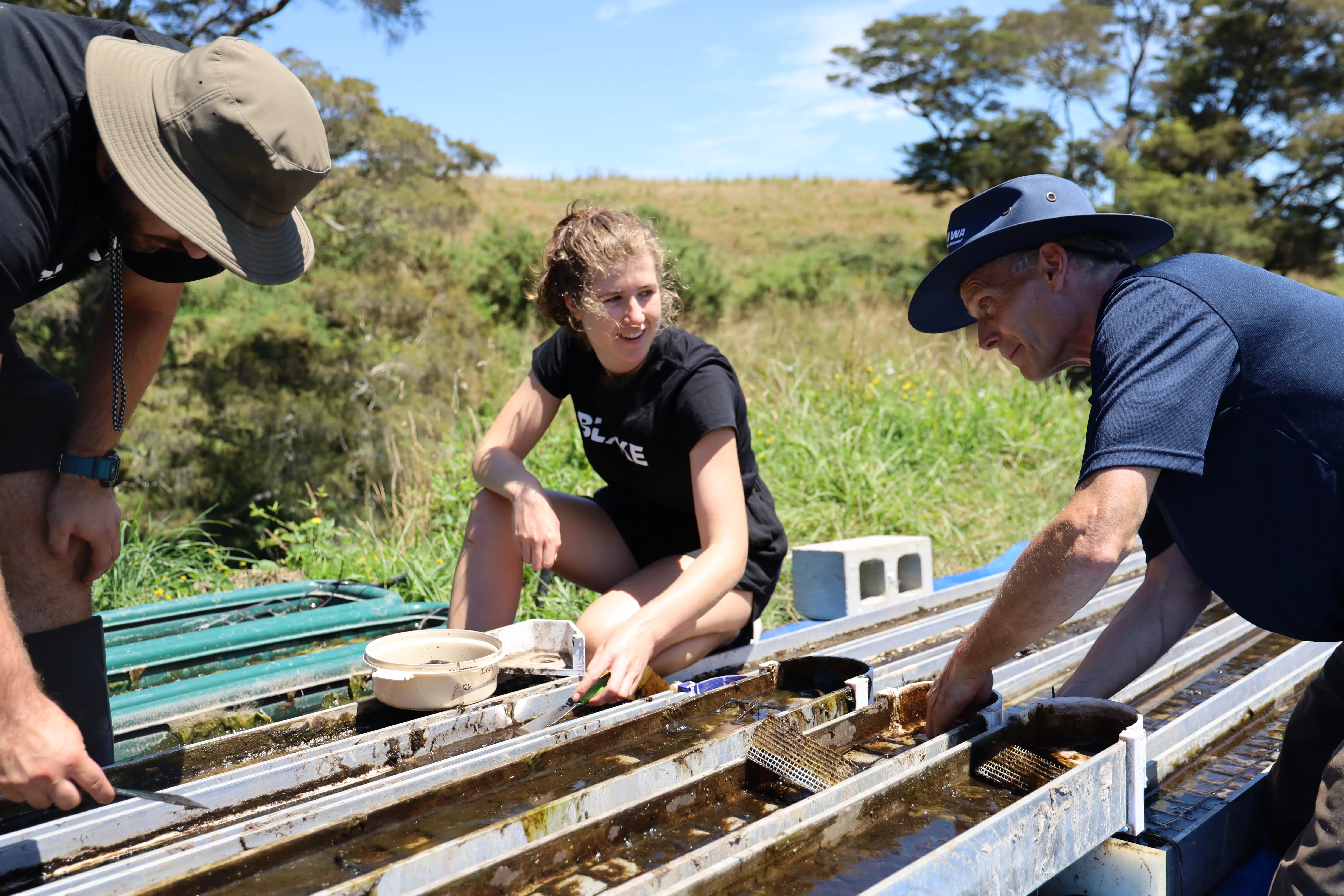
Earth Sciences New Zealand is the trusted expert in earth, water and climate science for Aotearoa New Zealand.
Formed through the merging of former research organisations NIWA and GNS Science on 1 July 2025, Earth Sciences NZ is generating critical science solutions to address New Zealand’s environmental and geoscience opportunities and challenges.
Through BLAKE’s partnership with Earth Science NZ, in 2025/2026 we are offering seven young New Zealanders the incredible opportunity to take part in scientific research encompassing marine, climate, atmospheric and freshwater sciences around New Zealand.
These programmes allow environmentally-passionate young Kiwis to contribute to Earth Science NZ’s scientific research while advancing their career opportunities and inspiring others.
They do this by working in the field with world-class experts and developing invaluable skills, relationships and leadership qualities that can influence their career pathways.
Further information about the 2025/26 programmes are outlined below.
BLAKE Earth Sciences NZ Ambassador Programmes – 2025/2026
BLAKE Earth Science NZ Ambassador – Marine Ambassador, RV Tangaroa
Two positions available
4th Jan – 3rd Feb 2026
BLAKE Ambassadors will participate in Chatham Rise fisheries research voyage on RV Tangaroa.
The Chatham Rise trawl survey series was started in 1992 and is the most comprehensive time series of species’ abundance at water depths of 200 to 800 m in New Zealand’s 200-mile Exclusive Economic Zone (EEZ). The 2026 survey will be the 29th in this time-series.
The main aim of the Chatham Rise surveys is to provide relative biomass estimates of adult and juvenile hoki. Hoki is New Zealand’s largest finfish fishery, with a current annual catch limit of 110 000 t. To manage the hoki fishery and minimise potential risks, it is important to have some predictive ability concerning recruitment into the fishery. Extensive sampling throughout the EEZ has shown that the Chatham Rise is the main nursery ground for juvenile hoki. Abundance estimation of juvenile hoki on the Chatham Rise provides the best index of potential recruitment to the adult fisheries. The survey data are used directly in the hoki stock assessment to estimate recruitment parameters, determine current stock size, and inform projections of future stock status.
Other commercial middle depth species (particularly hake and ling) and a wide range of non-commercial fish and invertebrates are also monitored by this survey. A review of the time series estimated biomass for 142 species or groups, with 49 of these species considered relatively well estimated. For most of these species, the trawl survey is the only fishery-independent estimate of abundance on the Chatham Rise. The trawl survey time series therefore fulfils an important “ecosystem monitoring” role.
There is extensive biological data collection to support fisheries assessments and related projects. Ancillary data, including acoustic (echosounder) and hydrographic (temperature and salinity) data are also routinely collected on the voyage.
Ambassadors will assist with at-sea data collection, including:
- Collecting biological information on trawl catch
- Collecting fisheries acoustic data
- Measurement of water properties
Ambassadors will work a 12-hour shift alongside Earth Sciences NZ staff members, scientists from overseas organisations, and the Tangaroa crew.
BLAKE Earth Science NZ Ambassador – Climate & Atmosphere, Wellington/Lauder
One position available
Late Nov to Early December 2025 – DATES TBC (2 weeks)
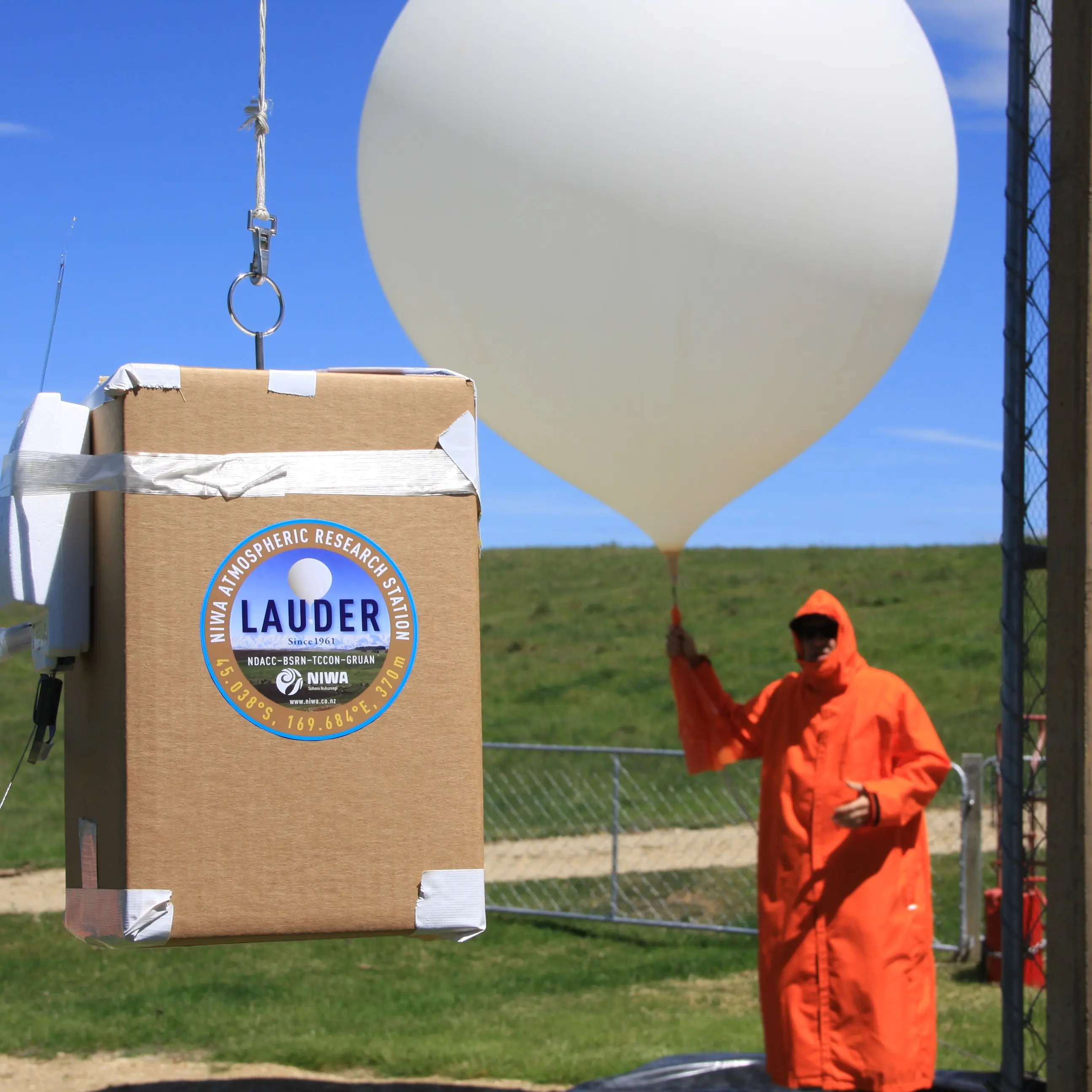
In this role, the BLAKE Ambassador will join Earth Sciences NZ science teams and become engaged in the day-to-day activities of measurement programmes at the key Earth Sciences NZ measurement sites of Lauder (Central Otago) and Wellington (Baring Head).
They will be actively involved in Earth Sciences NZ’s Climate and Atmospheric research programmes, learning how the measurements and samples are used and contribute to Earth Sciences NZ, New Zealand and international science programmes.
Activities will include conducting field measurements of climate and atmospheric variables and assisting with processing and analysis of measurements.
Key skills/attributes of the ambassador: Numerate with computer skills and keen interest in atmospheric composition and/or climate variability and change. Strong team player, personable with good communication skills.
Key tasks to be completed by ambassador: Assist with measurements of atmospheric constituents and state variables from a range of instruments. Assist with processing and analysis of measurements. Assist with analysis of air samples for trace gases.
Outreach to be completed by Ambassador: Writing descriptive material about measurement programmes. Generate blog about workstream and science related to the programme.
BLAKE Earth Science NZ Ambassadors – Aquaculture, Bream Bay
Two positions available
March 2026 – DATES TBC (2-4 weeks)
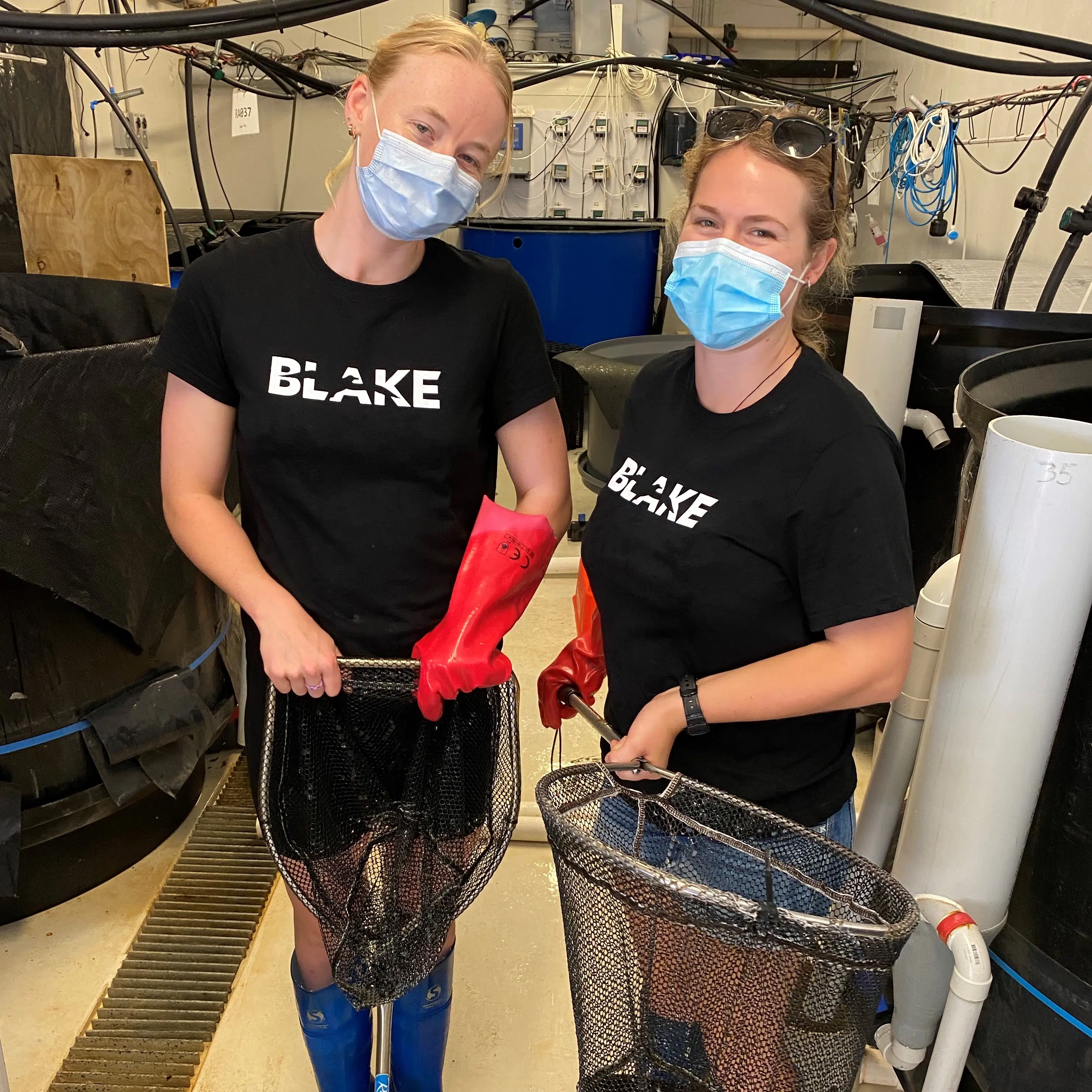
In this role, the BLAKE Ambassadors will join Earth Sciences NZ’s highly-skilled aquaculture team at the Northland Aquaculture Centre, which is home to New Zealand’s largest on-land marine research facility.
Here they will be part of a well-disciplined and efficient operation at the cutting edge of research and production to farm marine finfish and participate in the day-to-day operations of this vibrant and successful sight. They will learn good and ethical fish husbandry, how to look after large broodstock (fish as large as 40kg), larval rearing and the production of live microfeeds, size grading, health management, basic system management, feed management and finally harvesting.
BLAKE Earth Sciences NZ Ambassador – Freshwater, Waikato
Two positions available
Dec 8-19th 2025
In this role the BLAKE Ambassadors will spend two weeks with Earth Sciences NZ contributing to ongoing experiments by learning to conduct monitoring of experiments and analyse improvements in water quality, aquatic plant management and biodiversity and control of invasive freshwater clams
They will work with Earth Sciences NZ to develop novel control methods for invasive aquatic plants and clams and algal systems for wastewater treatment and resource recovery.
A key focus in this role is contributing to ongoing experiments by learning to conduct monitoring of experiments and analyse performance.
Key skills/attributes required of ambassadors: Māori students to work on related Mātauranga, Fresh Water Biology students.
Willingness to learn, attention to detail, good communication skills, punctuality and reliability.
Key tasks to be completed by ambassadors: Gain an understanding of projects and iwi relationships.